
What is the Llano Uplift?
Imagine the Earth’s crust as a layer cake. Normally in Central Texas, you’d drill down through hundreds of feet of limestone (the Edwards Plateau, the Hill Country) before hitting the really ancient basement rock. But in the Llano region, something weird happened: the ancient basement rock is right at the surface, like someone pulled back the top layers of cake to expose the bottom layer.
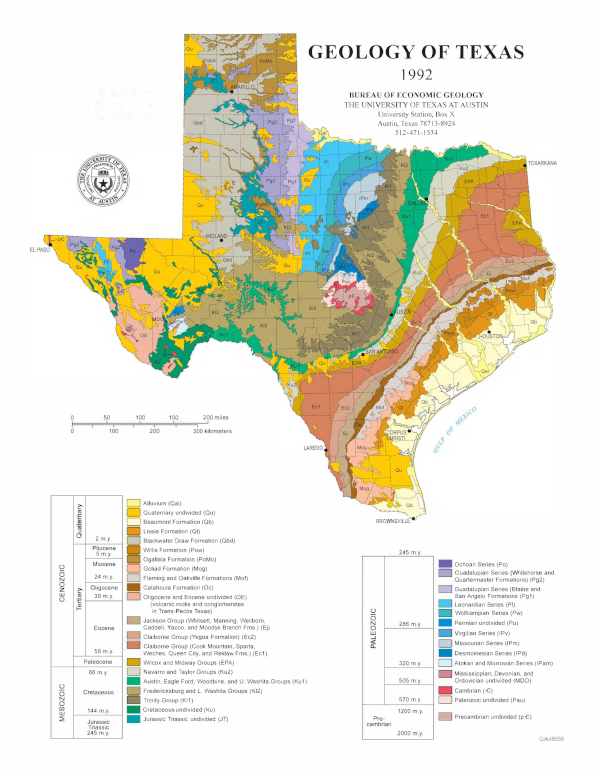
On a geological map of Texas, it looks like a big pinkish island of old rock (~90 miles wide) surrounded by younger rock. That’s the Llano Uplift.
How did it form? (The “Bobber Effect”)
Here’s the counterintuitive part: it’s not really a mountain that got pushed up. The name “uplift” is a bit misleading.
What actually happened:
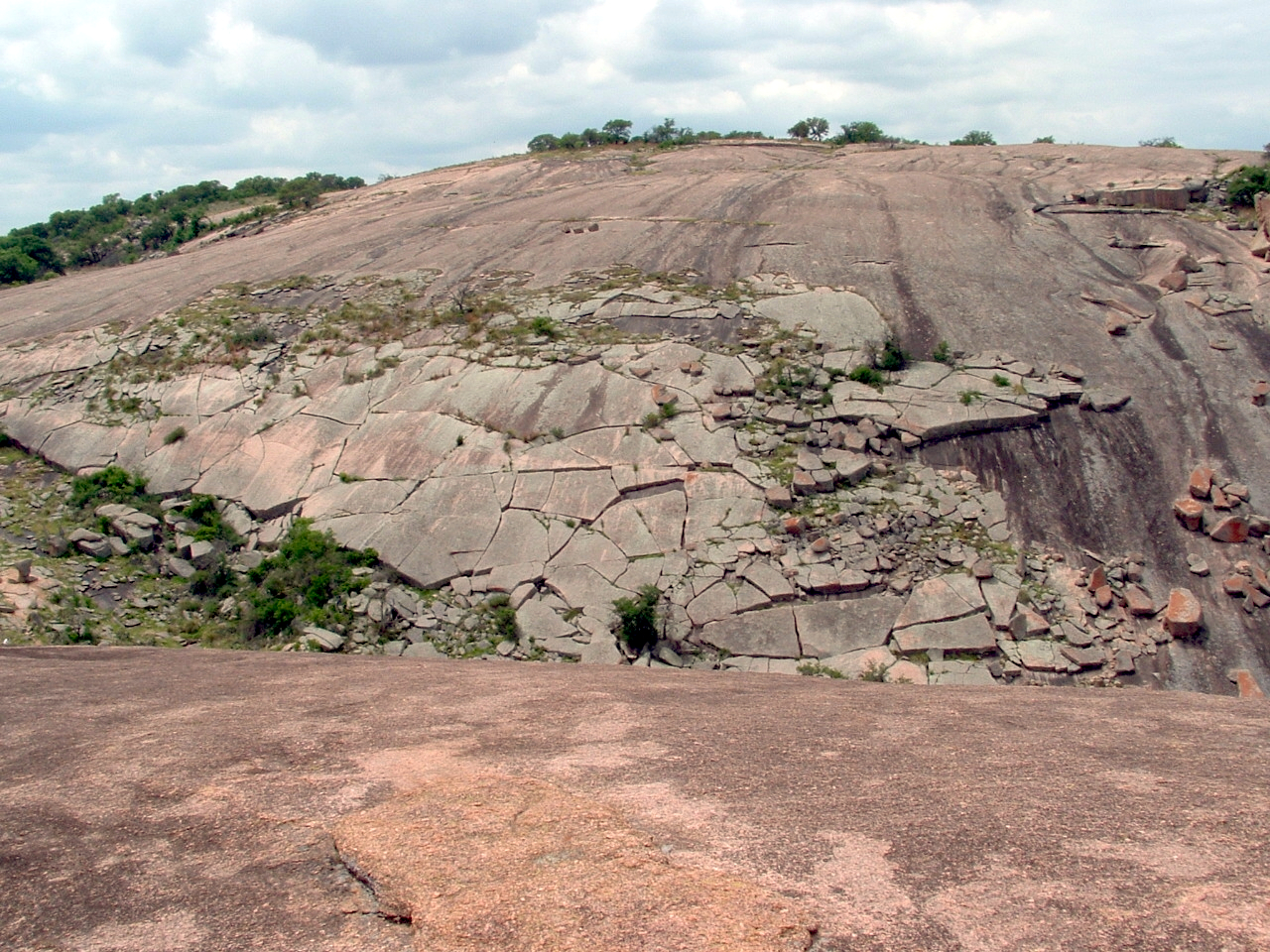
- ~1.3 billion years ago: Massive continental collisions (the Grenville Orogeny) created huge granite formations deep underground — think of the rock that makes up Enchanted Rock.
- Millions of years of erosion: The softer limestone and sedimentary rock surrounding this granite core slowly wore away, like water eroding a riverbank.
- The whole region got lifted: About 15 million years ago, the Balcones Fault zone shifted, tilting the whole Hill Country upward relative to the Gulf Coast.
- The surrounding rock eroded faster than the granite: The hard, ancient granite resisted erosion better than the limestone around it. So the granite core stayed put while everything around it washed away, making it look like it “rose up.”
Think of it like a cork in a bathtub — the granite bobbed upward as the softer stuff around it eroded away. A geologist in the YouTube video I found calls this the “bobber effect” and it’s exactly right.
Why is it geologically important?
1. It’s a rare window into the deep past
Most of Texas has rock that’s maybe 100-300 million years old at the surface (Cretaceous limestone, the dinosaur-era stuff). But the Llano Uplift exposes rocks that are 1.2 to 1.3 BILLION years old — Precambrian, from a time before multicellular life existed on land. It’s one of the few places in the central US where you can walk on rock that old without having to dig for it. You won’t find dinosaur tracks here because they hadn’t yet evolved when this rock was formed!
2. It tells the story of ancient continents crashing together
The rocks here are remnants of the Grenville Orogeny — the same mountain-building event that created the Appalachian Mountains’ roots. It’s evidence that proto-North America collided with another continent to form the supercontinent Rodinia. Without the Llano Uplift, geologists would have to guess about this chapter of Texas’ history from drill cores alone.
3. It’s a textbook example of an “inlier”
An inlier is where old rocks poke through younger ones. The Llano Uplift is one of the best examples in North America, and it’s been studied by geologists for over a century. Geologists from all over the world come here.
4. Unique minerals
Because such old, deep rocks are exposed, the area is rich in unusual minerals. It’s called the Central Mineral Region for a reason — amethyst, garnet, graphite, soapstone, and llanite (a unique pink granite with blue quartz crystals that’s only found here). The Southwestern Graphite mine near Burnet was North America’s only major source of high-purity graphite for decades.
5. It shapes the landscape you’re visiting
The Llano Uplift is why the Llano River looks the way it does — the river cuts through granite and ancient metamorphic rock, creating those wide, rocky riverbeds with clear pools and exposed bedrock. It’s why you see Enchanted Rock rising as a massive pink dome out of nowhere. And it’s why the soil around Llano is thinner and rockier than the rich blackland prairies east of Balcones Fault.
If you’ve found this interesting, you might want to check out the Llano Uplift Rock Shop on the square while you’re in town. You’ll find it at 805 Berry Street.